
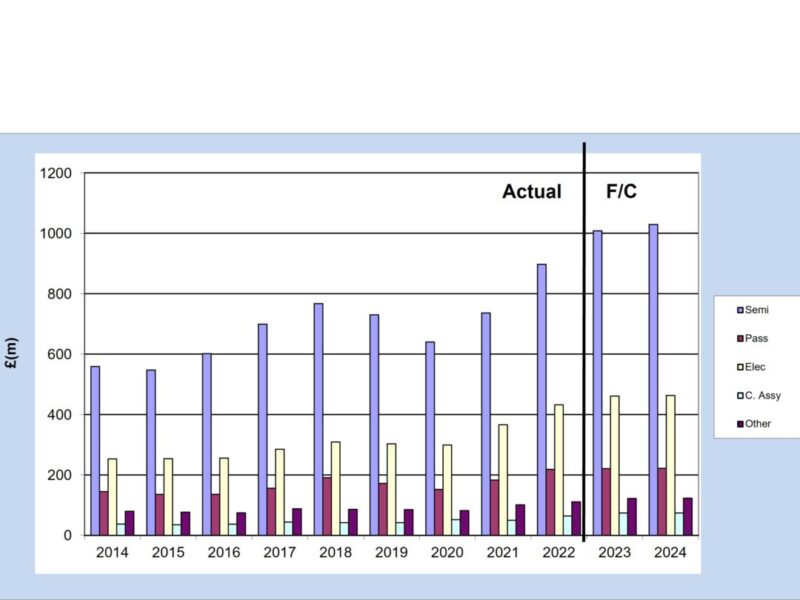
UK distribution looks to decline in 2024 from overstocking
The UK distribution market is looking at single digit growth in 2024 after higher than expected figures in 2023 and inventory
Authorised distributors are seeing higher levels of inventory that will slow the market in 2024, as predicted at the end of 2022. The Electronic Components Supply Network (ecsn) predicts the market will be essentially “flat-to-down” in the first half of 2024 with sales revenue growth of between -3% and 1%, with a mid-point growth of around -1%.
This comes as the growth across Europe is expected to be flat.
- UK distributors warn of stockpiling
- ecsn forecast sees bumper year for UK distribution
- UK distributors tackle shortages
“The strong growth that global electronic components markets saw throughout 2023 exceeded the Forecast ecsn issued at the end of last year, said Adam Fletcher, chair.
“At the time our members predicted single digit sales revenue growth in the range (2%)-to-4.9% in 2023 but we now believe that the outcome is likely to be 10% growth, driven primarily by customers’ ongoing concerns about components availability.
The outlook for 2024 is uncertain in the second half of the year, with revenues growing modestly in the range 1%-to-8%. This would see a mid-point of 1.4% growth over the previous year.
“The geopolitical tensions resulting from the Russian invasion of Ukraine, additional sanctions imposed because of the ongoing US / China trade war and more recently, events in the middle east have encouraged our members customers (OEMs) to maintain inflated in-house inventory and order backlogs but we’re now seeing an escalating trend towards them rebalancing both their in-house inventory and their order books,” said Fletcher
The ECSN covers authorised distributors in the UK and Ireland who are being encouraged by suppliers to take their excess inventory. Chip makers are also banking die and slowing work in progress to prevent higher supply leading to lower average selling prices (ASPs).
Given the current market conditions and geopolitical situation a revision may be required for the second half of the year says Fletcher
“There is now a substantial inventory build-up right across the electronic components supply network, which coupled with weakening customer demand into 1H’24 will ease pressure on supply, but is unlikely to reduce lead-times much further and we will not see a return to pre-pandemic levels,” he said.
“Customers must recognise this and continue to track the lead-times for the electronic components their organisations need and carefully manage their order backlogs and in-house inventory appropriately.
“The good news is that long, medium, and local distance logistics are now operating much more effectively, but as manufacturing capacity is transferred out of China to Vietnam, Singapore, India etc., there will be on-going revisions to routes and transport loading capacity that will need to be made and settled on during 2024 and will inevitably result in some disruption”.
“It is normal that after a time of product shortages the entire supply network is left over stocked and over capacity once the shortages start to ease,” said Aubrey Dunford, analyst at ecsn.
“Although billings have remained strong in the first three quarters of 2023 it is almost inevitable that they will decrease at the end of 2023 and into the first half of 2024 at least, as global inventory is brought back in-line with current demand levels throughout the electronic components supply network.”
Dunford believes that 2023 will close out showing that the UK electronic components DTAM (Distributor Total Available Market) will have grown by about 10%, higher than ecsn members expected and significantly higher than the growth in real demand, which is why we’re currently seeing over stocking throughout the supply network.
Despite the many macro challenges in the electronics industry, ecsn member Axiom Manufacturing Services says it will post solid growth numbers for 2023 and anticipates this trend continuing into 2024.
“The company’s commitment to quality and its focus on service and relationships has been key to managing the twin challenges of inflationary price pressures and continued extended component lead times,” said Managing Director, Chris Nye. Although he does admit to having difficult conversations with both suppliers and customers about pricing prior to finalising budgets for 2024: “Axiom MS strategy continues to be primarily growing our business with existing suppliers and customers through quality and service and selecting ‘right fit’ new long-term partners who value Axioms capabilities,” said Nye.
 If you enjoyed this article, you will like the following ones: don't miss them by subscribing to :