Trump Says U.S. Will Permit Nvidia H200 Exports to China with 25% Fee to U.S. Treasury
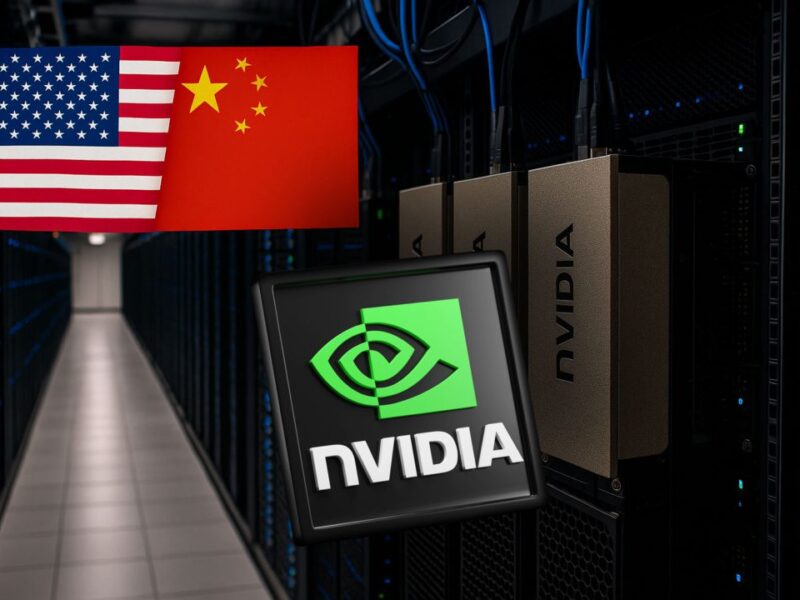
Two weeks after U.S. Commerce Secretary Howard Lutnick said that the decision on exporting Nvidia H200 chips to China was sitting with President Donald Trump, Trump says his administration has agreed to allow Nvidia to export its H200 AI accelerators to approved customers in China and certain other countries, under conditions designed to maintain national security. Trump claims China’s President Xi Jinping “responded positively” and that “$25% will be paid” to the U.S. government. The statement was made in a Truth Social post on 8 December.
Nvidia stock was up 1.6% at the closing bell, having opened at $182.64 and closed at $185.55. After the post went out at 4:59 PM local time, the stock spiked in after-hours trading, currently at just under $190 (MarketWatch).
The message also suggested that similar terms could apply to AMD, Intel and others, and that the Blackwell and Rubin-class chips would remain restricted.
No accompanying announcement has yet been published by the U.S. Department of Commerce, the White House or any federal export-control body. The specific mechanism for the 25% payment, licensing criteria for “approved customers,” and broader policy details have not been confirmed through official documentation.
Context: Export Controls, Negotiations, and Industry Pressure
U.S. controls on advanced semiconductor exports to China were introduced in 2022 and tightened through 2023–2024, limiting the sale of high-end AI accelerators and prompting Nvidia to produce reduced-performance variants for the Chinese market.
In recent months, industry groups have lobbied for clearer export frameworks, citing global demand for compute capacity. Media reporting indicates Commerce is reviewing pathways for controlled exports, and Nvidia has previously said that opening regulated access could balance economic opportunity with security concerns. However, no U.S.–China joint statement has been issued, and details of Trump’s claimed arrangement have not been independently verified.
What would approval change?
If the policy outlined by Trump is implemented:
-
Nvidia could resume sending H200 GPUs to China via export licensing.
-
China would gain access to a modern, non-degraded AI chip tier — below Blackwell, but well beyond earlier export-limited models.
-
A proposed 25% revenue fee to the U.S. Treasury would mark a novel approach to export governance.
-
Rival suppliers, including AMD and Intel, could be covered by similar rules pending negotiation.
Analysts warn that such a move may reignite debate in Washington over AI technology transfer. In parallel, a bipartisan bill introduced earlier in the year seeks to block exports of advanced AI chips to China for 30 months, so there is ongoing political contention.
Evolving Story
At present, the only detailed source for the specific deal terms is Trump’s Truth Social post. Commerce has not released procedural guidance, licensing timelines or enforcement notes, suggesting that the policy is not yet formalized.
For the semiconductor sector — already contending with supply-chain bottlenecks and national-security politics — confirmation of the agreement would represent a material shift with global implications, particularly for cloud and AI hardware markets in Asia.
 If you enjoyed this article, you will like the following ones: don't miss them by subscribing to :