Synopsys unveils electronics digital twin platform for AI-driven systems
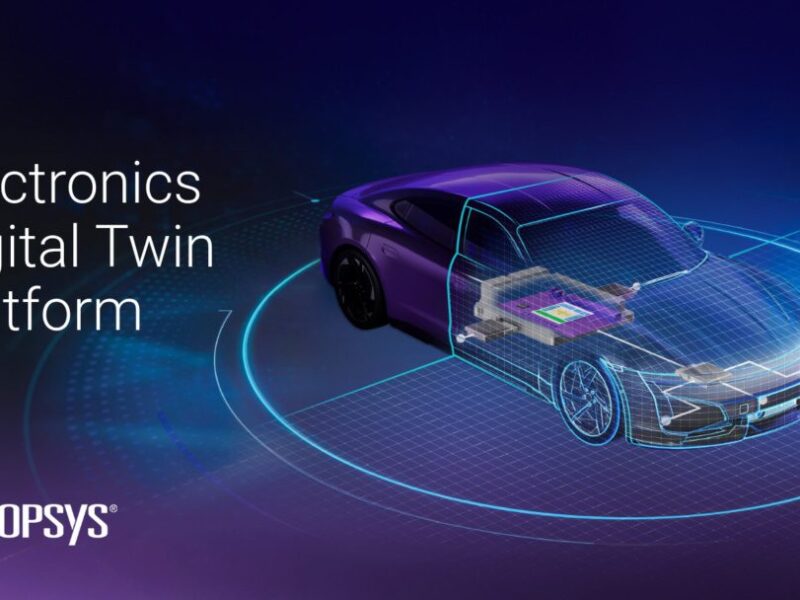
Synopsys has launched an open electronics digital twin platform designed to accelerate the development of software-defined products and physical AI systems. The company says the platform enables engineering teams to build and manage virtual replicas of complex electronics systems earlier in the design cycle.
The new Synopsys Electronics Digital Twin (eDT) Platform targets industries where software complexity is rapidly increasing, particularly automotive. For eeNews Europe readers working on advanced embedded and automotive systems, the technology highlights a growing shift toward virtual-first development workflows that can significantly shorten development cycles and improve collaboration across hardware and software teams.
Digital twins shift automotive development left
The eDT Platform is designed to create, deploy, and manage electronics digital twins — virtual representations of hardware, software, and system interactions. Synopsys says these digital twins allow engineering teams to simulate and validate software and system behavior long before physical hardware is available.
Initially focused on automotive applications, the platform allows OEMs to validate up to 90% of software prior to hardware availability. By enabling development and integration earlier in the process, the approach can reduce both development costs and time-to-market for new vehicles.
“Volvo Cars is rapidly adopting holistic, whole-vehicle validation, and we’re bringing that rigor into the earliest stages of design and development,” Johannes Foufas, Technical Manager, Software Factory, Volvo Cars. “Core to this transformation is our pioneering use of electronics digital twins working with Synopsys. With virtualized ECUs, our teams can ‘shift left’ test and validation before hardware exists, enabling us to reduce development cost, increase software quality, and accelerate innovation throughout the lifecycle of our vehicles.”
According to Synopsys, modern vehicles may contain more than 600 million lines of software code sourced from hundreds of suppliers, making early system validation increasingly critical.
“Automotive engineering teams are at their breaking point with more than 600 million lines of software, hundreds of software suppliers, rapidly shrinking development cycles, and mounting cost pressures,” said Ravi Subramanian, Chief Product Management Officer. “Intelligent system development from vehicles to AI factories, requires a fundamentally different approach — one that connects silicon designs to software behavior and full-system validation from the earliest stages of development. With the new eDT Platform, Synopsys is transforming engineering with an end-to-end digital twin foundation, bringing together our product and market leadership supplying virtual SoC models and large-scale system simulations, along with our extensive partner ecosystem, to simplify, accelerate, and scale the development of next-generation vehicles.”
Cloud-based engineering labs and ecosystem support
A central feature of the platform is the ability to create cloud-based “eDT Labs,” which combine Synopsys technologies, partner tools, models, and scalable compute resources in a ready-to-use development environment. These labs can support early SoC evaluation, software development before hardware availability, collaborative development across suppliers, and continuous system validation workflows.
The platform also integrates with partner technologies across the automotive ecosystem. Synopsys says pre-integrated tools include silicon models, debugging and simulation environments, and software IP components.
Cloud deployment plays a major role in the architecture. The platform supports both SaaS and bring-your-own-cloud models and can run on infrastructure such as AWS with Graviton4 processors to support large-scale virtual testing environments.
Industry partners including Arm, AWS, and Vector are backing the initiative, highlighting the growing demand for scalable virtual validation tools as software-defined vehicles and AI-enabled systems continue to increase in complexity.
 If you enjoyed this article, you will like the following ones: don't miss them by subscribing to :