Nvidia Vera Rubin GPU samples ship to customers ahead of 2026 ramp
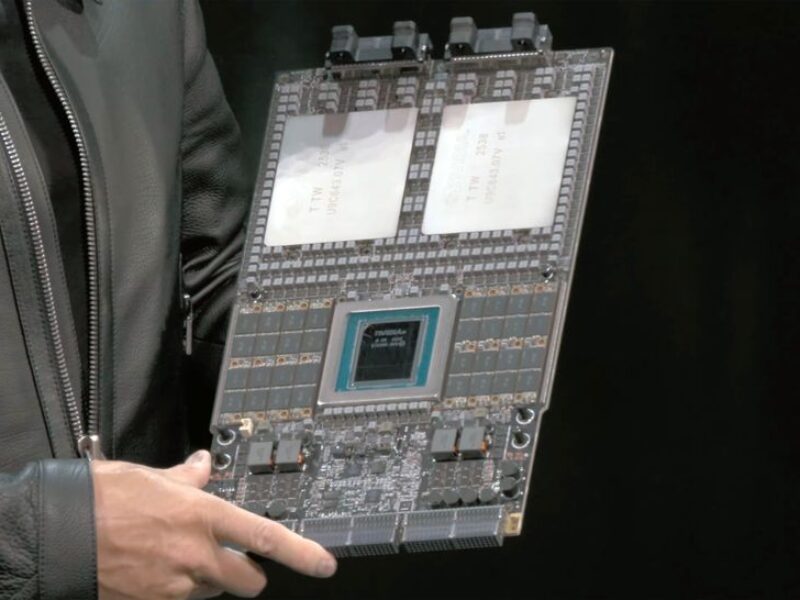
Nvidia says it has shipped first customer samples of its next-generation Vera Rubin platform, a milestone that typically signals that key performance and power targets have been frozen and that partners can begin qualification work ahead of volume availability. The update came during the company’s latest earnings call, with Nvidia reiterating that production shipments are still planned for the second half of 2026, with broader deployments following once customers validate their hardware and software stacks.
What Nvidia is sampling now
The Vera Rubin platform pairs an 88-core Arm-based Vera CPU with Rubin GPUs, with Nvidia positioning the combination as a rack-scale architecture rather than a “drop-in” accelerator update. In its current flagship configuration, each Rubin GPU is slated to carry 288 GB of HBM4, reflecting the direction of travel for AI infrastructure: more memory per device, higher bandwidth fabrics, and tighter CPU–GPU coupling.
Nvidia Rubin GPU samples and an ecosystem push
For OEMs and ODMs, sampling is the point where integration and validation work starts in earnest. Nvidia has indicated that some partners will receive different platform components depending on what they are qualifying, while others may receive more complete systems. Industry chatter also suggests Nvidia is pushing a more standardised, pre-integrated approach for Rubin-era compute building blocks, reducing the amount of bespoke board-level differentiation partners typically apply.
Why the Vera Rubin timeline matters
If Nvidia can keep the Vera Rubin ramp on schedule, it strengthens continuity from today’s Blackwell deployments to the next platform cycle at a moment when hyperscalers are planning multi-year AI data-centre builds. As previously reported by eeNews Europe when Nvidia outlined its Blackwell Ultra and Vera Rubin roadmap, the company’s cadence is increasingly about whole-system throughput and operability, not just peak GPU specs.
Nvidia’s comments on a “cable-free tray” approach also point to serviceability as a design goal for Rubin deployments, alongside performance. For more detail on the sampling update, see the report covering the earnings-call disclosure, and Nvidia’s own background on the platform direction in its Rubin platform briefing.
 If you enjoyed this article, you will like the following ones: don't miss them by subscribing to :