SK hynix warns memory shortage could last up to 2030
SK hynix chairman Chey Tae-won says the current memory squeeze may last another four to five years, extending a supply crunch that has already pushed up prices and tightened availability across the electronics sector.
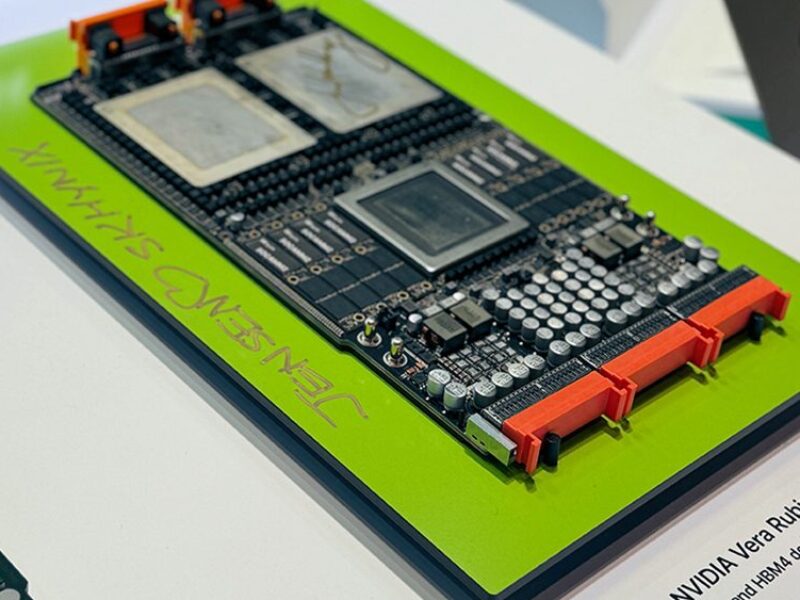
Speaking at Nvidia’s GTC event in California on March 16, Chey said the immediate problem is not simply booming AI demand in the abstract, but the sheer wafer intensity needed to build high-bandwidth memory for accelerators and AI servers. That matters because HBM has become one of the industry’s most profitable product classes, so capacity is being steered towards it while other parts of the market compete for what remains.
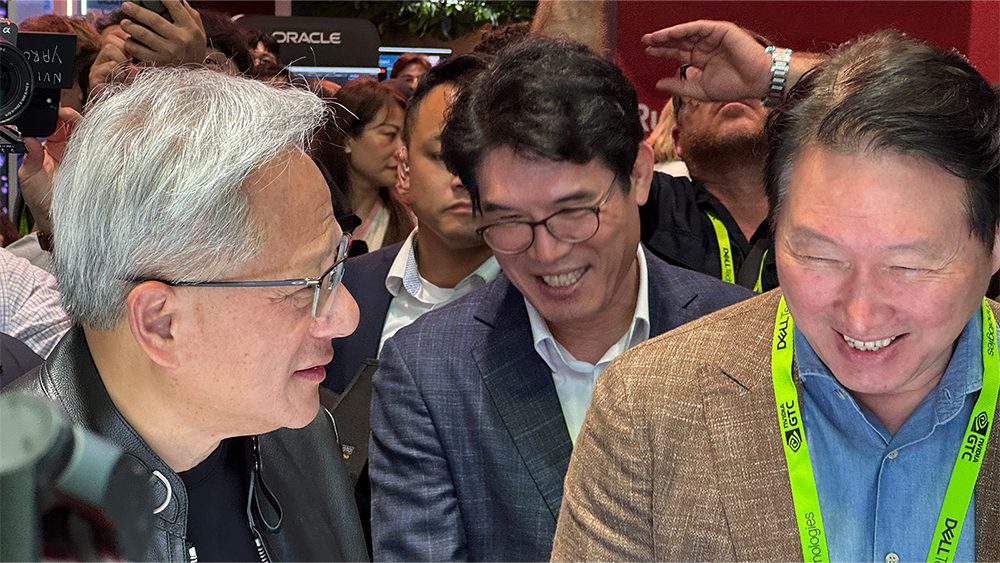
Nvidia CEO Jensen Huang, left, and SK Group chairman Chey Tae-won at Nvidia’s GTC event, where AI infrastructure and memory supply were among the issues in focus.
Memory shortage now looks structural
The remark is notable because it shifts the discussion away from a short-lived cycle and towards a more structural memory shortage. SK hynix is already moving to add capacity, including accelerating work on new South Korean fabs, but fresh supply is not something the industry can conjure up in a quarter or two. New lines, tooling and qualification still take years, even when spending is aggressive.
That longer timeline matches what other parts of the market have been signalling. Samsung has also described the present environment as an AI-driven supercycle and is pushing for longer supply agreements, while downstream device makers have warned that rising DRAM and NAND costs are starting to hit margins and product planning. As previously reported by eeNews Europe when eeNews Europe covered the recent memory price surge, the core issue is that AI infrastructure is absorbing capacity that would otherwise have served PCs, handsets and mainstream storage.
What the memory shortage means for buyers
For equipment makers and OEMs, the practical consequence of the memory shortage is not only higher pricing, but less certainty over allocations. That can distort road maps well beyond the data-centre world. Notebook vendors, smartphone makers and embedded-system designers may all find themselves paying more for memory subsystems, redesigning around availability, or signing longer-term deals to reduce exposure to the spot market.
The irony is that AI demand is helping memory makers financially while making life harder for many of their customers. Reuters reported Chey’s comments in the context of wafer constraints and the long build-out time for new capacity, and that is the key point here: even if demand growth cooled tomorrow, the industry would still need time to rebalance. Until then, the memory shortage looks less like a blip and more like the operating environment.
For Europe’s electronics industry, that keeps memory procurement on the list of things to watch very closely through 2026 and beyond.
 If you enjoyed this article, you will like the following ones: don't miss them by subscribing to :