Keysight, KT SAT demonstrate first multi-orbit NTN handover
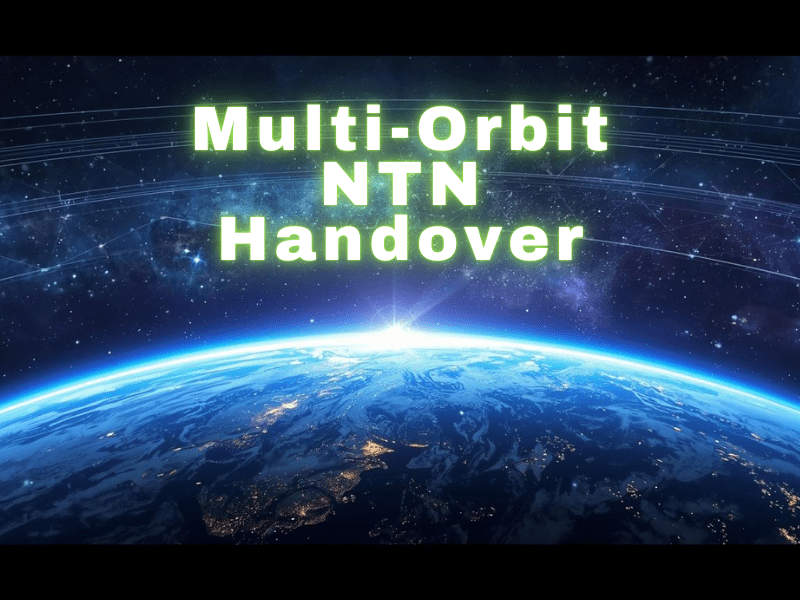
Keysight Technologies and Korean satellite operator KT SAT have demonstrated what they say is the industry’s first 5G NR non-terrestrial network (NTN) handover between a live geostationary earth orbit (GEO) satellite and an emulated low Earth orbit (LEO) link. The proof-of-concept was carried out using KT SAT’s KOREASAT-6A satellite at the company’s Kumsan Satellite Network Operation Center in Korea.
For eeNews Europe readers following the evolution of 5G toward 6G, the demonstration provides a concrete look at how multi-orbit satellite systems could be integrated into future networks. It also offers insight into how newly standardized Ku-band NTN spectrum in 3GPP Release 19 may behave under real-world mobility conditions, well ahead of large-scale deployment.
Multi-orbit mobility moves from theory to practice
The demonstration established a live Ku-band GEO connection, operating at around 12.3 GHz downlink and 14.4 GHz uplink, and then executed a handover to an emulated LEO link while maintaining session continuity. According to the companies, this marks the first time such a multi-orbit NR-NTN handover has been shown in a controlled lab environment using a commercial GEO satellite.
As the industry looks beyond 5G, integrating terrestrial and non-terrestrial networks is widely seen as essential for achieving ubiquitous coverage and network resilience, particularly in remote or disaster-affected regions. However, satellite links bring challenges that are largely absent in terrestrial systems, including long propagation delays, Doppler shifts and rapidly changing link conditions, all of which complicate mobility management.
By moving beyond earlier single-orbit GEO demonstrations, Keysight and KT SAT apparently aimed to show how operators can transition from isolated satellite links to continuous, multi-orbit connectivity across space and ground domains. The use of Ku-band is particularly significant, as this spectrum is now central to emerging global NTN standards and operator deployment strategies, Keysight noted.
Lab-based validation for future 6G services
According to the company, the test setup used Keysight’s Network Emulator Solutions and UeSIM RAN Testing Toolset to emulate both the base station and user equipment. A two-way link was established through KOREASAT-6A, and service continuity was maintained during the handover from the GEO satellite to the emulated LEO connection.
Operating in Ku-band means that the results are directly relevant to 3GPP Release 19 NTN frequency bands now entering commercial planning. This gives satellite operators, device makers and chipset vendors early visibility into propagation, timing, and interoperability issues without relying solely on costly and complex field trials.
For KT SAT, the work opens the door to validating advanced NTN mobility scenarios in the lab before new satellites or user devices are deployed, potentially accelerating service rollouts and reducing development risk, the company indicated in a release. More broadly, the companies say insights from the collaboration are intended to inform standards discussions and operator evaluations, helping the wider ecosystem shorten time-to-trial and de-risk the commercialization of multi-orbit NTN services.
 If you enjoyed this article, you will like the following ones: don't miss them by subscribing to :