IQM looks to the end of the NISQ quantum era with 300qubit machine
 Cette publication existe aussi en Français
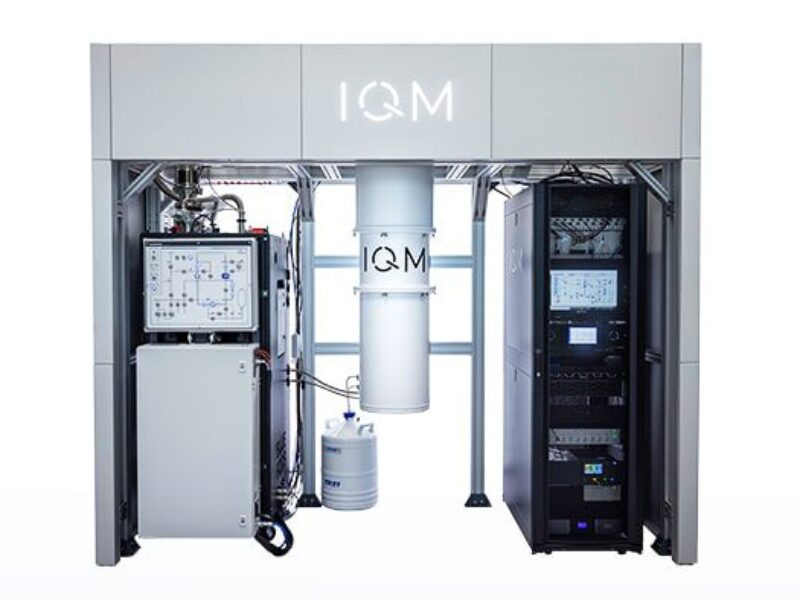
IQM in Finland is developing a quantum computer with 300 qubits that it says marks the transition from the current NISQ era to full fault tolerant machines.
A 150qubit machine will be delivered to Finnish research lab VTT in 2026, followed by the 300qubit system in 2027. This is powered by two superconducting 150-qubit quantum processors and will be specifically designed to serve as testbeds for quantum error correction (QEC) to enable research and development for fault-tolerant quantum computers.
“This is the first time anyone has developed a superconducting quantum computer with so many qubits,” Mikko Välimäki, Co-CEO of IQM tells eeNews Europe. “This 300-qubit superconducting quantum computer has the most superconducting qubits procured anywhere in the world. In addition, the delivery schedule is quick,” says Piia Konstari, Project Manager for VTT’s quantum computer tendering process.
The machine uses a Noisy Intermediate Scale Quantum (NISQ) architecture for its superconducting qubits made at the IQM fab in Espoo, Finland, although the company is also building a fab in Grenoble, France. This is one of the last machine to use the NISQ approach before moving to larger, fault tolerant machines with millions of qubits, he says
“Whether you have NISQ or fault tolerant it will be a gradual transition,” said Välimäki. “Give or take, there will be 300 to 1000 qubits in the NISQ era, then there will be 5000 to 10,000 qubits and those will be error corrected. It’s a transition platform, and we are talking about this as the first error corrected machine for sure to be available for any customer.“
“This 300qubit system will be used for error correction development, we are working with partners on error correction codes on FPGAs, GPUs and CPUs, and we are starting working with all of them right now. Some are more interesting than others.”
“We have prepared the offer and working on the tech specs for a year but we have agreed with VTT not to disclose the specification at this stage as this is not a product announcement. We are thinking about different configurations for different use cases. We might have a combination of topologies in a single computer, so we might have a Crystal topology, one Crystal and one Star or two Stars.”
But he did point to the use of chiplets with 150 qubits to build larger machines.
The 300qubit quantum computer will be purpose-built and designed to support quantum error correction experiments an essential step toward fault-tolerant quantum computing. The system is expected to enable algorithm research for techniques such as circuit knitting.
“We think we have a huge difference in the software platform as we go forward, it is more flexible than competitors, with a software development kit (SDK), a free choice of programming tools and lower level access to the qubits.”
The two quantum computers will be integrated with the Finnish HPC infrastructure. IQM has previously delivered 5-qubit, 20-qubit, and 50-qubit machines to VTT. The 5 qubit machine costs €1m, and the 300 qubit machine will be a lower price pre qubit, says Välimäki.
“One of the challenges for on prem systems has been the price point, how can you sell such systems for $50m, $100m, so we have thought about it from a different perspective. It has to be more affordable than that, particularly for universities. We want to get the price per qubit lower as we go, not higher than where they are today,” he said.
“The chip is expensive to do and we have our foundry in Finland and we are expanding as we go which will bring down costs, but the price pressure is not going to go away,” he said.
“The current topology is difficult to scale form a pricing perspective as the cables and the components are very expensive, the electronics costs quite a lot compared to the system price but the electronics we are using today is not the same as we will use two years from now, and the cables are not the same.”
 If you enjoyed this article, you will like the following ones: don't miss them by subscribing to :