Inversion Semiconductor aims at brighter, faster lithography
Inversion Semiconductor Inc. (San Francisco, Calif.) is a 2024 startup that plans to use particle acceleration to develop brighter, tunable light sources for next-generation lithography.
The company is saying it will be able to manufacture chips up to 15 times faster and with much finer features than existing systems.
Inversion joins Lace Lithography as a startup looking to unseat, or at least be seen as alternative to established lithography market leader ASML Holding NV. Certainly, both startups see challenges to the further development of flash exposure of resist using 13.5nm wavelength extreme ultraviolet light as it is currently generated.
Inversion’s approach to lithography is based on using a phenomenon called Laser Wakefield Acceleration (LWFA) to create a compact, high-powered light-source. Inversion expects that LWFA can shrink traditional particle accelerators used for generating high-energy light by a factor of 1,000 to tabletop size – so from kilometers in size to a meter or so. That’s according to Inversion’s backer, the Y Combinator startup accelerator and venture capital firm.
LWFA uses the interaction between an intense laser pulse and a plasma to accelerate electrons to extremely high energies over very short distances. The process is analogous to a surfer riding the wake behind a boat: electrons “surf” the plasma wave and gain energy as they travel.
Tuning down the wavelength
Inversion reckons it can use LWFA to accelerate electrons to energies of multiple GeV in a short distance. These high-energy electrons then pass through a free electron laser, which uses magnetic structures to make the electrons emit coherent light at precise wavelengths
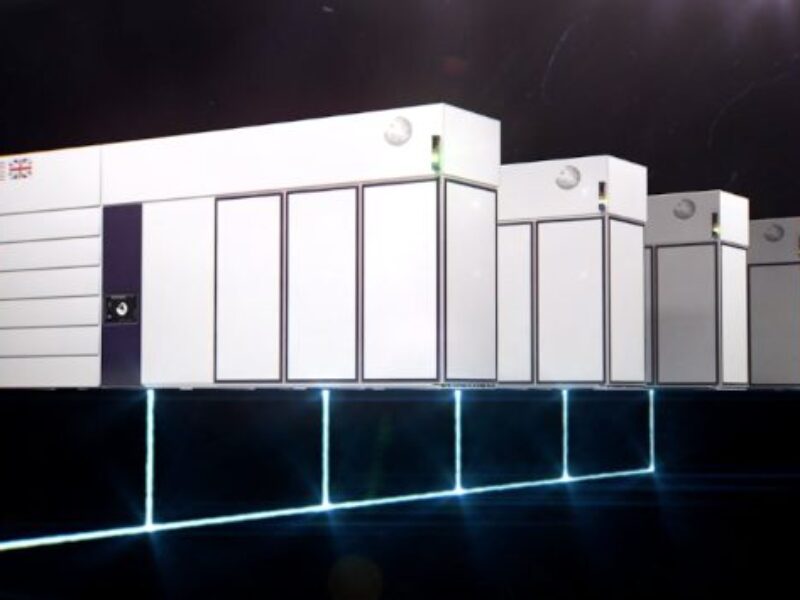
Inversion’s plans to use its advanced light source to project patterns just like conventional EUVL, but the light source is tunable to 13.5nm or lower wavelengths with a next-generation target of 6.7nm. In addition, it can double transistor densities at the same numerical aperture, while achieving three times the throughput compared to current machines, the company claims. The source is also likely to be bright enough to illuminate multiple wafer stages, so one source and four, or eight lithography machines would further enhance manufacturing efficiency.
The company was founded by Rohan Karthik, who serves as CEO, and Daniel Vega, CTO. These two were picked up by the Entrepreneur First scheme before being backed by the Y Combinator startup incubator. Karthik was educated in Leeds, England, and at Imperial College, London, while Vega started his education in Irvine, California, but spent a year a University College London as well as doing research at CERN, the European particle acceleration research campus.
The two entrepreneurs have set up a laser lab in the basement of the Y Combinator building in San Francisco and plan to test accelerator prototypes with the Lawrence Berkeley National Lab.
Related links and articles:
News articles:
Startup Atlant 3D raises funds for atomic layer manufacturing
Speciality ALD prompts Applied Materials’ to swoop for Picosun
ASML, IMEC renew key European partnership
 If you enjoyed this article, you will like the following ones: don't miss them by subscribing to :