Intel moves ARM cores onto 1.8nm process for foundry
Intel Foundry Services (IFS) has signed a long term deal with ARM for the Intel 18A 1.8nm semiconductor process.
The collaboration will focus on mobile system on chip (SoC) designs first, but allows for potential design expansion into automotive, Internet of Things (IoT), data centre, aerospace and government applications. The deal is for ‘multigenerational’ cores although ARM has not specified which generations. It is currently on cores using the ARMv7 and v8 generations and developing ARMv9-A.
Intel is highlighting the ‘robust manufacturing footprint that includes US and EU-based capacity,” in a bid to capitalise on global trade uncertainties for local production.
IFS and ARM will undertake design technology co-optimization (DTCO) for cores on the Intel 18A process technology. This has two new technologies, PowerVia for backside power delivery and RibbonFET gate all around (GAA) transistor architecture for higher performance and power efficiency.
IFS and ARM will develop a mobile reference design, allowing demonstration of the software and system knowledge for foundry customers. The two are also looking at system technology co-optimization (STCO) to optimise the platforms from applications and software through package and silicon.
- Intel sees 18A test chip
- Intel prepares for trillion transistor era shake up
- Backside power key to Intel process
So far Intel has not committed to the 18A process in Europe, although it has been lighting up a leading edge EUV scanner at its fab in Lexlip, Ireland. Discussions on a semiconductor fab in Madgeburg, Germany, are continuing but have not specified the technology for the plant. It also has plans for a back end manufacturing plant in northern Italy and has committed $1bn to its IP programme, including supporting the competing RISC-V eco-system.
“This collaboration will enable a more balanced global supply chain for foundry customers working in mobile SoC design on ARM-based CPU cores,” says Intel, pointing out that IFS includes packaging, software and chiplets.
- Intel lights up Irish 4nm EUV scanner
- Report: Intel requires €10 billion subsidy for German fab
- Germany plans to pay €5 billion towards Magdeburg fabs
- Intel goes slow, casts doubt on Italian chiplet fab
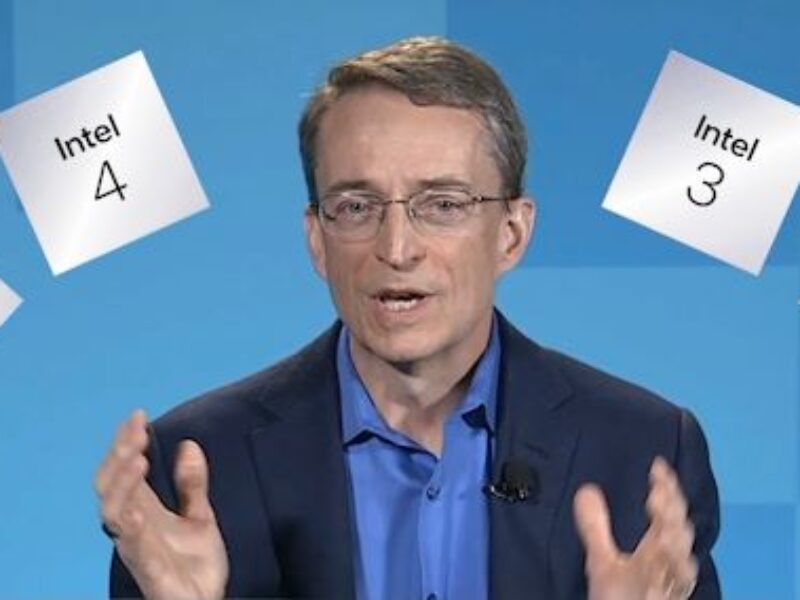
“There is growing demand for computing power driven by the digitization of everything, but until now fabless customers have had limited options for designing around the most advanced mobile technology,” said Pat Gelsinger, CEO of Intel. “Intel’s collaboration with ARM will expand the market opportunity for IFS and open up new options and approaches for any fabless company that wants to access best-in-class CPU IP and the power of an open system foundry with leading-edge process technology.”
- Intel renames manufacturing nodes, tips RibbonFET
- Intel samples 144 core 3nm power efficiency processor
“ARM’s secure, energy-efficient processors are at the heart of hundreds of billions of devices and the planet’s digital experiences,” said Rene Haas, CEO of ARM. “As the demands for compute and efficiency become increasingly complex, our industry must innovate on many new levels. ARM’s collaboration with Intel enables IFS as a critical foundry partner for our customers as we deliver the next generation of world-changing products built on ARM.”
 If you enjoyed this article, you will like the following ones: don't miss them by subscribing to :