Germany looks to lithium sulfur battery tech
 Cette publication existe aussi en Français
The German government has backed a three year, €5.3m project to develop a new generation of lithium sulfur battery.
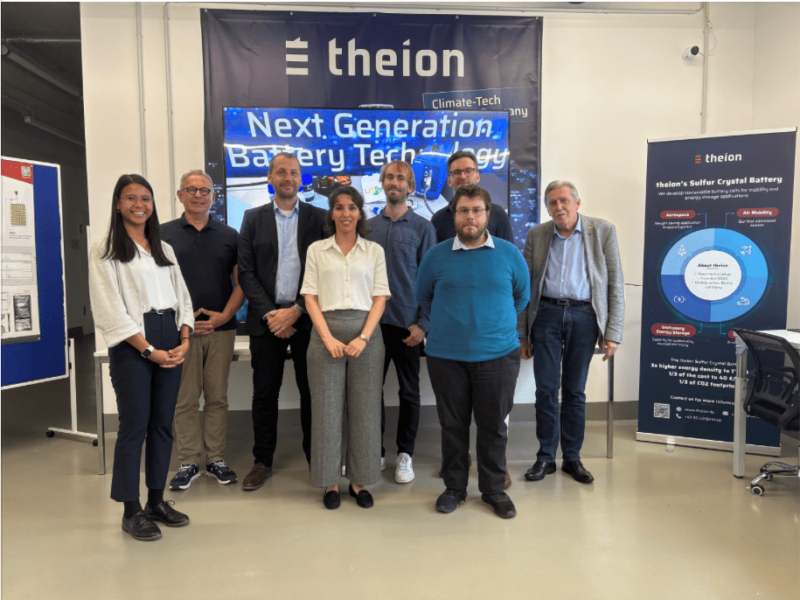
The LiSSy (Lithium-Sulphur Synergies) research project is led by theion with QuanteQ, Fraunhofer ISIT (FAB-SH) and Helmholtz-Zentrum Berlin to develop lithium-sulphur cells with energy densities of over 500 Wh/kg for various applications including electric aircraft.
Lithium-sulfur battery chemistry has had a chequered past, with companies such as Oxis Energy failing to deliver mass production. Back in 2018, a four year, €8m EU project called LISA (Lithium Sulphur for Safe Road Electrification) also aimed to develop cells for Renault that by 2024 had led to two working pilot lines and 18Ah cells with an energy density of 450Wh/l.
However there are global operations scaling up production, which has left Europe at a disadvantage. In the US, Lyten is focussing on lithium sulfur and has been buying up the assets of failed battery maker NorthVolt, including its Cuberg subsidiary. LG Energy is also planning a pilot line for solid state batteries using lithium metal and sulfur.
- Stellantis signs Zeta Energy for lithium sulfur cells
- Lyten plans $1bn lithium sulfur battery gigafactory
theion is coordinating the consortium and contributes its patented technology for sulphur crystallisation, the development of high-performance sulphur cathodes and the design of scalable cell architectures.
QuanteQ specialises in compact and powerful laser systems. In the project, it is contributing expertise in laser applications for material processing and cell activation.
Fraunhofer ISIT is providing expertise in cell characterisation, post-mortem analysis and recycling with a focus on evaluating performance and ageing behaviour as well as strategies for recycling the materials used.
The Helmholtz Centre Berlin is contributing analysis methods to the project, using synchrotron radiation and other advanced methods, reaction processes are investigated in real time such as the formation of polysulphides, the development of interfaces or the growth of dendrites on the lithium anode.
The project team will create a knowledge pool that brings together the expertise and insights of the various stakeholders and will work towards clearly defined milestones in regular workshops.
Berlin-based QuanteQ develops and markets the world’s most compact high-performance lasers in their class for (micro) material processing with a portfolio of diode-pumped solid state lasers (DPSS) of various wavelengths, including 355 nm (UV) and 266 nm (DEEP UV), which are characterised by extremely high peak power. Applications include (micro)marking, microdrilling, microcutting and (micro)material processing. In addition to its standard products, QuanteQ also customises laser systems for specific customer requirements, such as those in the current LiSSy project.
The technology deliberately avoids critical raw materials such as cobalt and nickel, thereby reducing Europe’s dependency on those raw materials.
 If you enjoyed this article, you will like the following ones: don't miss them by subscribing to :