Digital twin boost for fabs, AI factories
A wide range of companies are adopting digital twin technology from Nvidia to boost the development of complex manufacturing factories.
TSMC is using digital twins of its fabs, while Jacobs, including PA Consulting in the UK, is using its digital twin expertise from transportation and water systems to optimise AI datacentres. Other electronics companies using the technology include Foxconn, Delta, Wistron and Pegatron.
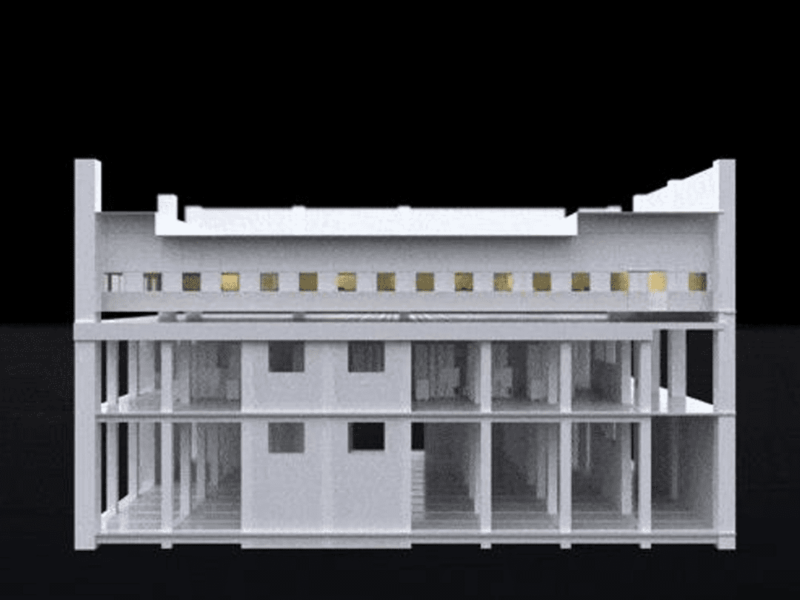
TSMC is collaborating with an AI-powered digital twin startup to optimize the planning and construction of its new fabs. Visualizing these optimized layouts in a digital twin allows planning teams to proactively identify and resolve equipment collisions, understand system interdependencies, and assess impacts on space and operational key performance indicators.
It is using Nvidia’s cuOpt process optimisation library for optimization and reinforcement learning with Isaac Lab, enabling the generation of intricate, multilevel piping systems in seconds. This enables engineers to virtually validate complex pipe routing and drastically reduce design revisions.
“TSMC has intricate piping across multiple floors,” said Rev Lebaredian VP for Omniverse and simulation technology at Nvidia. “With Omniverse they have been able to do full piping planning in just days rather than months.”
TSMC also uses vision language models and vision foundation models to improve automated defect classification workflows, boosting efficiency to classify wafer product defects for engineers to pinpoint potential root causes for the issues.
Jacobs is using Nvidia’s Omniverse Blueprint to improve the design, simulation, deployment and operations of AI factories.
Jacobs will test and enhance the end-to-end blueprint workflow, enabling accurate simulations of facility equipment efficiency, throughput and resiliency. The digital twin has been created to combine the design and simulation of billions of components to build digital twins of AI Factories with new integrations across the power, cooling and network ecosystems. This allows engineering teams to design, simulate and optimize factories within physically accurate virtual environments, enabling early issue detection and the creation of smarter, more reliable facilities.
“For more than a decade, Jacobs has used digital twin technologies for clients in water and transportation—revolutionizing the way we design, build, operate and maintain critical infrastructure,” said Jacobs Executive Vice President Koti Vadlamudi.
“Now, AI data centres are being built and intelligently designed with digital twins— creating precise, real-time replicas of physical infrastructure to predict potential issues, optimize operations and positively influence energy consumption — ensuring a more connected and sustainable future for our communities.”
This is used at Portugal’s SINES DC Campus by Start Campus for a 1.2GW AI-scale datacentre powered entirely by renewable energy and cooled with a zero-water system. In Australia, the company is working with quantum computing startup PsiQuantum on the master planning, schematic design, and engineering services for one of the largest utility-scale, fault-tolerant quantum computers in development.
Delta Electronics, Foxconn and Wistron are also using digital twins for their electronics factories. Combining Universal Scene Description (OpenUSD) and Nvidia Omniverse libraries and blueprints for digital twins is accelerating the development, testing and validation of autonomous robots and robotic fleets used in the factories.
At its Taiwan facilities, Foxconn engineers rely on the Fii Digital Twin platform, developed with OpenUSD, Siemens and Omniverse technologies, to design and simulate robot work cells, assembly lines and entire factory layouts.
These digital twins connect to material control systems and use Autodesk Flexsim, Nvidia cuOpt and Nvidia Isaac Sim to enable engineers to simulate and dynamically optimize the flow of materials, equipment, autonomous mobile robots (AMRs), automated guided vehicles, and other robots and humans.
The standard digital twin model allows designs and plans to be quickly migrated and easily reconfigured for new factory deployments. Using the Omniverse Blueprint for AI factory digital twins, Foxconn can simulate and test GB200 Grace Blackwell Superchips in liquid-cooled PODs to replicate the conditions of an AI factory.
Similarly the Wistron Digital Twin (WiDT) platform uses software from Autodesk, Cadence and Microsoft and taps into the Nvidia Omniverse libraries. Connecting the WiDT platform to generative AI tools and real-time data from surface mount technology (SMT) machines and shopfloor control systems allows operations teams to visualize real-time dashboards to quickly diagnose and improve machine and plant performance.
 If you enjoyed this article, you will like the following ones: don't miss them by subscribing to :